Get Sounds Like UsiPhone and Android
How it works
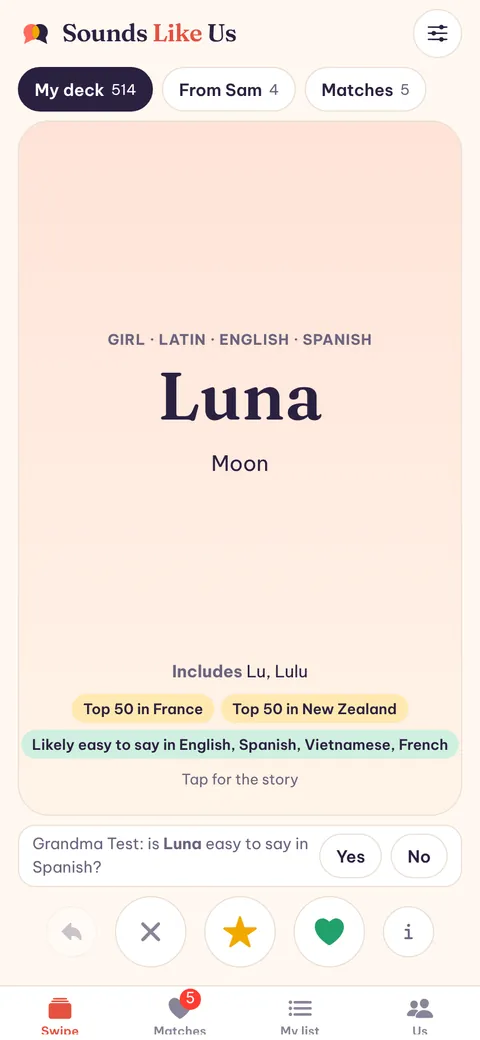
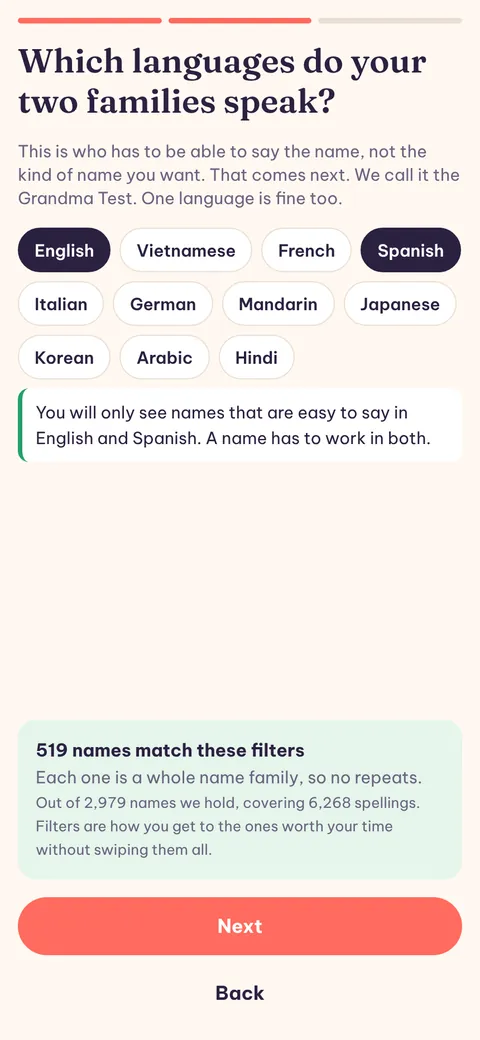
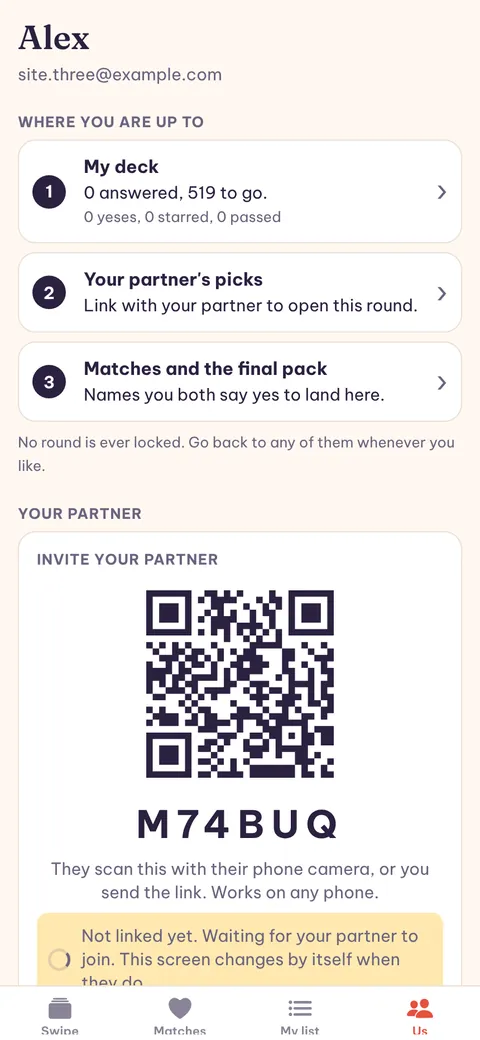
- Your own deck. Pick the languages and cultures on both sides and swipe on gut feel. Your partner does the same, on their own phone, in their own time.
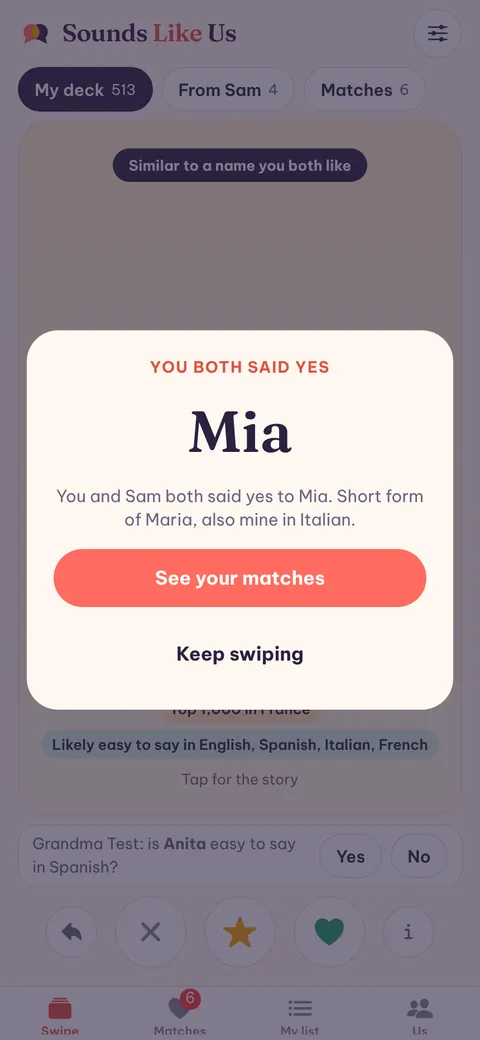
- Your partner's yeses. Next you see the names your partner liked, with the reason on each card. When you both say yes, it is a match.
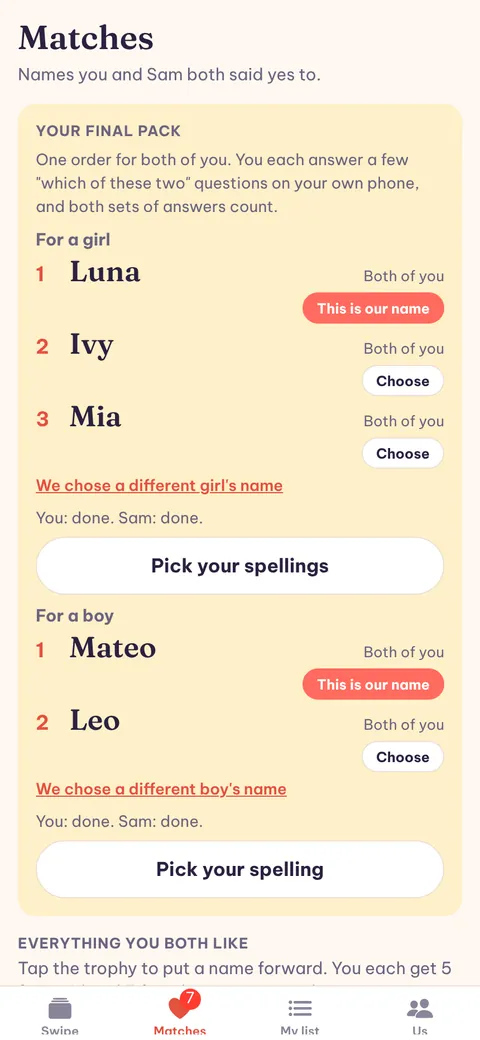
- The final pack. Each of you puts up to five names forward, and a few quick head to heads give you a joint top three.
What you get
- Your own deck, in your own timeYou each swipe on your own, whenever suits you. Only the names you both like become matches.
- The Grandma TestEvery card shows which of 11 languages the name is likely easy to say in, so you can check it against both sides of the family.
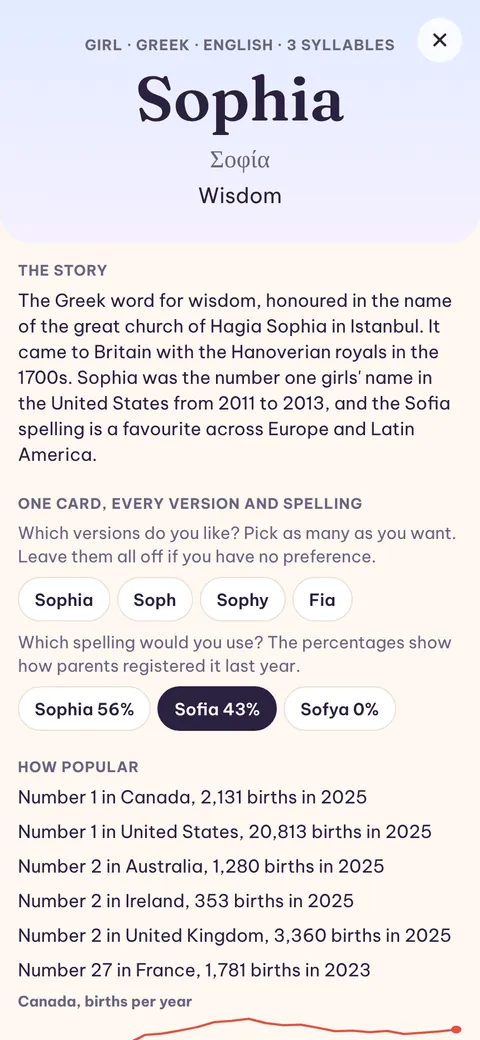
- Never the same name twiceSophia, Sofia and Sophie are one card. Answer a name once and it never comes back, in any spelling.
- Real popularityOfficial birth records from the US, Canada, the UK, Ireland, France and Australia, every spelling counted together.
- From a long list to one nameThree rounds: your own deck, then your partner's yeses, then a final pack you narrow to a top three together.
- Start in secondsNo account needed to start swiping. Link with your partner by QR code, link or a short code when you are ready.
How it compares
| A common complaint about baby name apps | Sounds Like Us |
|---|---|
| The same name keeps coming back, often in another spelling. The most common complaint in recent reviews. | One card per name family. Answer once and it is gone for good. |
| Lists by origin, but nothing on how a name will sound to the other side of the family. | The Grandma Test on every card, checked against the other family's language. |
| Partner linking that fails without saying so. | Link by code, QR code or link, and both phones confirm it. |
Complaints from our reading of 21,950 app store reviews of baby name apps.
Questions
Do we have to swipe at the same time?
No. Each of you swipes in your own time. A name becomes a match as soon as you have both said yes to it.
Do I need an account?
Not to start. You need one only to link with your partner, so both phones can share answers.
Which languages does the Grandma Test cover?
It works out how each name will sound, sound by sound, in 10 languages: Vietnamese, Mandarin, Japanese, Korean, Spanish, Italian, German, French, Arabic and Hindi. Pick the languages your two families speak and every name in your deck works in all of them.
How many names are there?
4,121 names from 22 cultures, with every spelling of a name on one card, and you can add your own.
Is it on Android?
Sounds Like Us is built for both iPhone and Android, and a couple can use one of each.